HACCP Audit Checklist Template: Master Food Safety Compliance
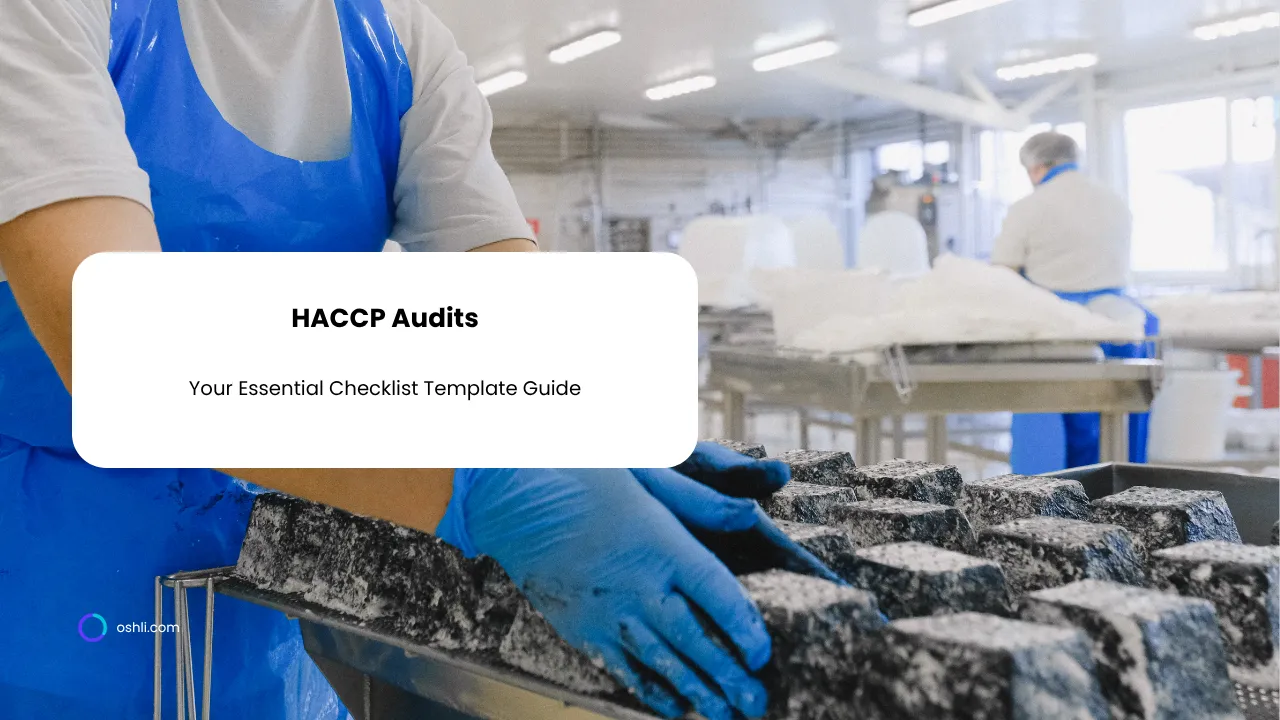

HACCP Audits: Your Essential Checklist Template Guide
When it comes to keeping food safe and operations smooth, nothing beats a solid HACCP audit. But let's face it—diving into the details without a clear roadmap can feel overwhelming. That's where a well-structured checklist comes in. It turns complex compliance into straightforward steps, helping you spot risks before they become problems. In this guide, we'll break down everything you need to know about HACCP audit checklists, including a practical template you can adapt right away.
What Makes HACCP Audits Non-Negotiable?
HACCP, or Hazard Analysis and Critical Control Points, isn't just another acronym on your compliance list—it's the backbone of food safety management. It focuses on identifying potential hazards in your processes, from raw material handling to final packaging, and putting controls in place to mitigate them.
Audits ensure your HACCP plan isn't gathering dust on a shelf. They verify that critical control points (CCPs) are monitored effectively, records are up to date, and corrective actions are in play when things go off track. Skip them, and you risk recalls, fines, or worse—harming the people who trust your products.
The beauty of a checklist? It keeps everyone on the same page, reduces human error, and makes audits efficient. Whether you're prepping for an external inspection or running an internal review, this tool saves time and builds confidence.
Key Components of a HACCP Audit Checklist
A strong checklist covers the seven core principles of HACCP while addressing the nuts and bolts of your daily operations. Think of it as your audit's spine: flexible enough to fit your setup but thorough enough to catch the details.
Here's a breakdown of the must-have sections:
1. Preliminary Steps: Assemble and Prepare
Start strong by gathering your team and documents. - Confirm the audit team includes reps from quality, production, and maintenance. - Review the latest HACCP plan, flow diagrams, and prerequisite programs (like sanitation schedules). - Schedule the audit during normal operations to get a real-world view.
This phase sets the tone—rushed prep leads to missed insights.
2. Hazard Analysis Review
Double-check if your identified hazards still hold up. - Walk through each process step: receiving, storage, preparation, cooking, cooling, and serving. - Ask: What biological, chemical, or physical risks lurk here? Have any changed due to new suppliers or equipment? - Verify that CCPs are correctly placed—those pivotal spots where controls make the biggest difference.
Pro tip: Use photos or sketches to document any on-site observations for later reference.
3. Critical Control Points in Action
This is the heart of the audit. For each CCP: - Inspect monitoring procedures: Are thermometers calibrated? Logs complete? - Test limits: Do temperatures stay within safe ranges? pH levels checked as required? - Evaluate corrective actions: What happens if a batch hits the danger zone? Is there evidence of swift response?
Look for patterns in records—consistent compliance is your goal, not perfection.
4. Verification and Validation Checks
HACCP thrives on proof, so audit how you prove it works. - Spot-check validation records: Do scientific studies back your critical limits? - Review verification activities: Internal audits, lab tests, or supplier certifications up to date? - Ensure training logs show staff know their roles—no assumptions here.
If something's lacking, note it as an opportunity for improvement, not a failure.
5. Record-Keeping and Documentation Audit
Paper trails matter. - Scan for completeness: Every CCP should have monitoring sheets, deviations, and sign-offs. - Check accessibility: Can anyone on shift grab records quickly? - Assess retention: Are docs stored securely for the required period?
Digital tools can streamline this, but the checklist keeps it human-readable.
6. Prerequisite Programs Scrutiny
Don't overlook the foundation. - Pest control: Baits fresh? Entry points sealed? - Cleaning and sanitation: Schedules followed? ATP swabs showing results? - Supplier approval: Vetting processes current?
These support your HACCP plan, so weaknesses here ripple through everything else.
7. Final Wrap-Up and Reporting
End with clarity. - Summarize findings: Strengths, gaps, and recommendations. - Assign action items with deadlines and owners. - Plan the next audit—quarterly? Annually?
A quick debrief with the team turns the audit into a learning session.
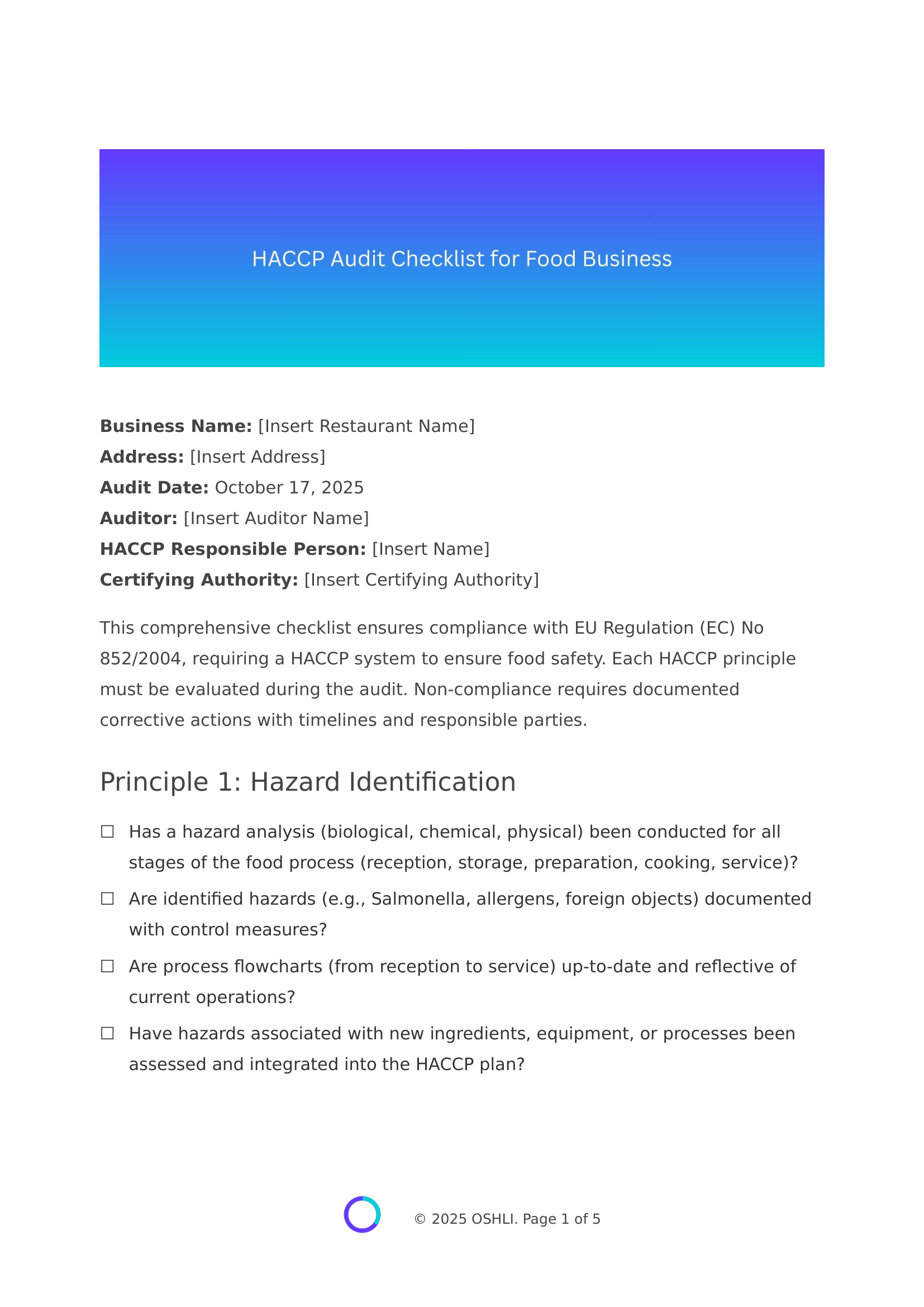
Your Ready-to-Use HACCP Audit Checklist Template
Below is a simple, customizable template to kickstart your next audit. Print it, digitize it, or tweak it to match your operations. Each section includes prompts to guide your notes.
| Section | Checklist Items | Status (Yes/No/NA) | Notes/Observations | Action Required |
|---|---|---|---|---|
| Preliminary Steps | Team assembled? Documents ready? Schedule confirmed? | |||
| Hazard Analysis | Hazards reviewed per process step? CCPs accurate? Changes noted? | |||
| CCPs Monitoring | Procedures in place? Limits met? Records complete? | |||
| Verification/Validation | Studies current? Activities logged? Training verified? | |||
| Records | Complete and accessible? Retention compliant? | |||
| Prerequisites | Pest control effective? Sanitation verified? Suppliers approved? | |||
| Wrap-Up | Findings summarized? Actions assigned? Next audit scheduled? |
Fill this out during your walkthrough, then review it post-audit. It's designed to be concise yet comprehensive—aim for specifics in the notes column to make follow-ups actionable.
Pro Tips to Elevate Your HACCP Audits
Even with a killer checklist, execution matters. Here are battle-tested ways to make your audits sharper:
- Involve the Frontline Early: Shop floor folks spot issues auditors miss. Get their input before and after.
- Leverage Tech Wisely: Apps for real-time logging beat clipboards, but start simple if your team's not tech-savvy.
- Benchmark Against Best Practices: Compare your CCP limits to industry standards—tweak where it makes sense without overcomplicating.
- Turn Audits into Habits: Schedule mini-checks monthly to keep full audits from feeling like a surprise.
- Celebrate Wins: When compliance shines, share it. It builds buy-in across the team.
Remember, the goal isn't zero findings—it's continuous improvement. Each audit hones your system a bit more.
Wrapping It Up: Stay Ahead with Consistent Audits
HACCP audits aren't a chore; they're your edge in a world that demands unflinching safety. With this checklist template in hand, you're equipped to conduct thorough reviews that protect your operations and build trust. Grab the template, run through a practice round, and watch how it streamlines your process. What's one tweak you'll make to your next audit? Drop it in the comments—let's keep the conversation going.
Ready to implement? Your first step is printing that template and scheduling a team huddle. Safe operations start now.
Join our newsletter!
Enter your email to receive our latest news.
Don't worry, we don't spam


Related Articles

Guide to Developing a Professional Checklist for ISO 45001 Diagnostic Audits
The ISO 45001 standard establishes a framework for Occupational Health and Safety Management Systems (OHSMS), aiming to enhance employee safety, reduce workplace risks, and create safer working conditions. A diagnostic audit aligned with ISO 45001 is a proactive approach that allows organizations to assess current compliance, identify weaknesses, and prioritize improvements. Central to this process is a professionally structured checklist that ensures consistency, accuracy, and depth in audit execution.
Cooling, Heating, and Storage Methods: Your Essential Guide
Discover how to create a cooling, heating, and storage methods template to ensure food safety, meet compliance, and optimize temperature control with free templates.

The Impact of Artificial Intelligence on Food Certification: Innovations, Challenges, and Reflections for the Future
Food certification has long been a cornerstone for ensuring the quality, safety, and consumer trust in the products we eat. In recent years, artificial intelligence (AI) has been transforming various sectors—and food certification is no exception. This article, written in approximately 3000 words, dives deep into how AI is reshaping the world of food certification. It explores the benefits, the uncertainties, and raises questions that invite us to rethink the traditional models of food safety.