HACCP Plans Guide 2025: Hazard Analysis & SSOP Examples for Food Safety Mastery
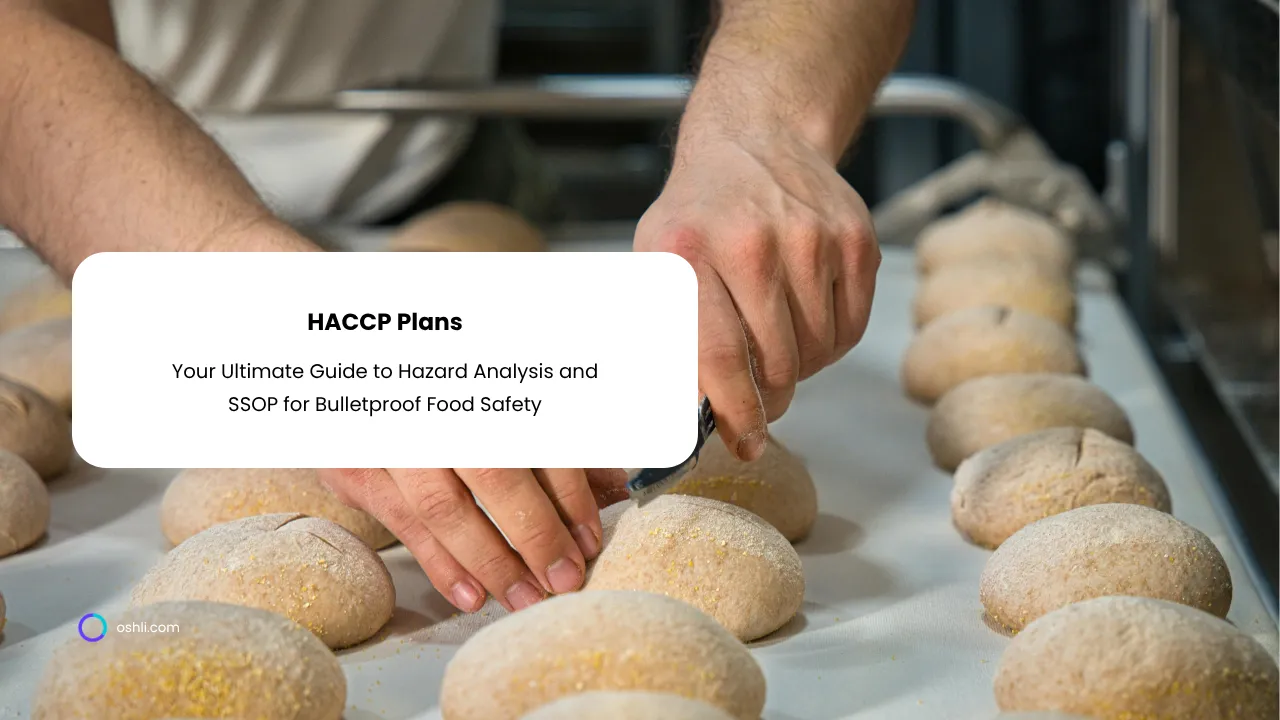

Mastering HACCP Plans: Your Ultimate Guide to Hazard Analysis and SSOP for Bulletproof Food Safety
Hey, food safety pro—whether you're overseeing a production line, managing a kitchen crew, or scaling up your processing operation, you've got one non-negotiable priority: keeping hazards at bay. In a world where a single contamination can ripple through supply chains and straight to consumers, having a rock-solid system isn't optional—it's essential. That's where HACCP plans come in, supercharged by razor-sharp hazard analysis and airtight SSOP (Sanitation Standard Operating Procedures). These aren't just buzzwords; they're the trifecta that turns reactive firefighting into proactive mastery.
If you're staring at a blank document wondering how to weave these elements together, you're in the right spot. This guide is your no-fluff roadmap to building an effective HACCP plan that incorporates thorough hazard analysis and seamless SSOP integration. We'll break down the essentials, unpack the why and how, and hand you a customizable HACCP plan template you can adapt today. By the end, you'll not only understand how these pieces fit but also how to implement them for smoother operations, fewer headaches, and compliance that stands up to any audit.
Let's dive in—because nailing your HACCP plans with hazard analysis and SSOP isn't about checking boxes. It's about safeguarding your team, your products, and your reputation. Ready to level up?
What Are HACCP Plans, Hazard Analysis, and SSOP? The Basics Demystified
First things first: Let's clarify the lingo so we're all on the same page. A HACCP plan—short for Hazard Analysis and Critical Control Points—is a preventive strategy designed to identify, evaluate, and control food safety risks. It's not a static report; it's a dynamic framework that evolves with your processes.
At the heart of every HACCP plan is hazard analysis, the systematic process of spotting potential dangers. These hazards fall into three buckets: biological (think bacteria or viruses), chemical (pesticides or allergens), and physical (bits of glass or metal). Hazard analysis isn't guesswork—it's a deep dive into every stage of your operation, from raw material receipt to final dispatch.
Then there's SSOP, or Sanitation Standard Operating Procedures. These are the foundational hygiene protocols that keep your environment clean and contamination-free. SSOP act as prerequisites to HACCP, ensuring that basic sanitation is locked in before you layer on critical controls. Without solid SSOP, your HACCP plan is like a house built on sand—prone to collapse under pressure.
Together, they form a powerhouse: Hazard analysis pinpoints threats, HACCP plans control them at key points, and SSOP maintains the baseline cleanliness. Globally recognized standards bodies emphasize this integration, making it a cornerstone for food operations of all sizes. Recent data shows that robust food safety systems like these could prevent up to 90% of foodborne incidents if universally applied. No wonder forward-thinking operators treat HACCP plans as their secret weapon.
Why Invest in HACCP Plans with Hazard Analysis and SSOP? The Tangible Wins
You might be thinking, "We've got basic cleaning routines and a watchful eye—do we really need a full HACCP plan overhaul?" The answer? A resounding yes. Here's why prioritizing hazard analysis and SSOP within your HACCP plans delivers outsized returns.
1. Ironclad Compliance and Audit-Proof Operations
Regulatory frameworks worldwide demand proactive risk management. A well-integrated HACCP plan with documented hazard analysis and SSOP streamlines inspections, reducing non-compliance risks that could lead to shutdowns or fines.
2. Drastic Risk Reduction and Cost Control
Foodborne hazards cost the global economy billions annually in recalls, medical treatments, and lost productivity. By embedding hazard analysis early, you catch issues before they escalate—potentially slashing waste by 30-50% through targeted SSOP. Imagine diverting funds from crisis mode to innovation instead.
3. Enhanced Product Quality and Consumer Confidence
Consumers today demand transparency. A HACCP plan that showcases rigorous hazard analysis and hygiene via SSOP builds trust, fostering loyalty and opening doors to premium markets where safety certifications shine.
4. Efficient Teamwork and Scalable Growth
Clear SSOP protocols make training a breeze, while hazard analysis in your HACCP plan clarifies roles at critical junctures. As you expand—new lines, suppliers, or products—this foundation scales effortlessly, minimizing disruptions.
5. Long-Term Resilience Against Emerging Threats
From climate-driven supply variances to novel pathogens, threats evolve. A flexible HACCP plan with ongoing hazard analysis and adaptive SSOP keeps you ahead, turning potential pitfalls into managed routines.
In short, skipping this trio is like skipping brakes on a delivery truck—sure, you might get by short-term, but the crash is inevitable. Embrace HACCP plans, hazard analysis, and SSOP, and watch your operation thrive.
The Core Pillars: Breaking Down HACCP Principles with Hazard Analysis and SSOP Integration
HACCP plans rest on seven timeless principles, but infusing hazard analysis and SSOP elevates them from theory to practice. We'll explore each, with practical examples from a mid-sized processing facility handling ready-to-eat meals. Use these as your blueprint.
Principle 1: Conduct Thorough Hazard Analysis
This is ground zero: Map your entire process and interrogate it for risks. Hazard analysis here is exhaustive—assess every step for biological, chemical, and physical threats, factoring in likelihood and severity.
- Integration Tip: Layer in SSOP as preventive measures, like daily surface swabbing to baseline sanitation before deeper analysis.
- Example: At receiving, hazard analysis flags chemical risks from supplier residues. SSOP mandates visual checks and rinse protocols.
- Pro Move: Rate hazards in a matrix (high-likelihood/high-severity gets top priority) to focus your HACCP plan.
Principle 2: Identify Critical Control Points (CCPs)
CCPs are the choke points where controls can prevent or eliminate hazards identified in your hazard analysis. Not every step qualifies—use decision trees to pinpoint them.
- Integration Tip: Ensure SSOP supports CCPs, like pre-op sanitation verifies equipment readiness.
- Example: Pasteurization is a CCP for biological hazards (e.g., Listeria). Hazard analysis confirms it's the last kill step; SSOP includes post-clean verification swabs.
- Pro Move: Limit to 4-6 CCPs per process to avoid overload—your HACCP plan stays lean and mean.
Principle 3: Set Critical Limits
Define non-negotiable thresholds for each CCP, backed by science from your hazard analysis.
- Integration Tip: Tie limits to SSOP metrics, such as sanitizer concentrations (e.g., 200 ppm chlorine).
- Example: For cooling CCP, limit is <41°F within 6 hours to curb bacterial growth. Hazard analysis justifies via growth curve data.
- Pro Move: Make limits SMART—specific, measurable, achievable, relevant, time-bound—for foolproof monitoring.
Principle 4: Implement Monitoring Systems
Consistent checks ensure CCPs stay within limits. This is where your HACCP plan gets operational.
- Integration Tip: Embed SSOP monitoring, like hourly handwashing station checks, into the routine.
- Example: Continuous temp logging during storage CCP, with alerts for deviations. Hazard analysis informs frequency based on risk profiles.
- Pro Move: Assign clear responsibilities—who monitors, how, and when—to eliminate ambiguity.
Principle 5: Define Corrective Actions
When limits breach, act fast to fix, document, and prevent repeats.
- Integration Tip: SSOP provides fallback sanitation steps, like deep cleans during holds.
- Example: If reheating CCP hits <165°F, hold product, reprocess, and retrain. Hazard analysis guides root-cause probes.
- Pro Move: Use flowcharts in your HACCP plan for quick-reference responses.
Principle 6: Establish Verification Procedures
Validate that your system works—audits, calibrations, and reviews confirm hazard analysis accuracy and SSOP efficacy.
- Integration Tip: Quarterly SSOP audits cross-check with HACCP plan logs.
- Example: Microbial swabbing verifies sanitation; trend analysis from hazard analysis flags patterns.
- Pro Move: Schedule unannounced internal audits to mimic real scrutiny.
Principle 7: Maintain Robust Record-Keeping
Documentation proves compliance and fuels continuous improvement.
- Integration Tip: Centralize SSOP logs with HACCP plan records for seamless traceability.
- Example: Digital timestamps for all monitoring, retained for 2+ years.
- Pro Move: Index everything—easy access saves hours during reviews.
Weave hazard analysis and SSOP through these principles, and your HACCP plan becomes unbreakable.
Your Go-To HACCP Plan Template: Featuring Hazard Analysis and SSOP Sections
Time to get tactical. Here's a plug-and-play HACCP plan template tailored for integration. Copy it into a doc or spreadsheet, customize for your flow, and you're off. It's modular, with dedicated spots for hazard analysis and SSOP to ensure nothing slips.
HACCP Plan Template Structure
| Section | Purpose | Key Components |
|---|---|---|
| 1. Executive Summary | Snapshot of your plan. | Operation Description, Scope, Key Personnel, Revision Date. |
| 2. Process Flow Diagram | Visual overview. | Step-by-step flowchart; highlight CCPs. |
| 3. Prerequisite Programs (SSOP) | Sanitation foundation. | Detailed procedures: Cleaning Schedules, Pest Control, Employee Hygiene; Monitoring/Checklists. |
| 4. Hazard Analysis | Risk identification. | Table: Process Step, Hazard Type, Likelihood/Severity, Controls (link to SSOP). |
| 5. CCP Details | Control specifics. | Table: CCP ID, Description, Critical Limits, Monitoring, Corrective Actions. |
| 6. Verification & Validation | System checks. | Schedule: Audits, Calibrations, Record Reviews. |
| 7. Training & Documentation | People and proof. | Training Matrix, Record Index, Update Log. |
Sample SSOP Section: Daily Cleaning Protocol
| Task | Frequency | Responsible | Method | Verification |
|---|---|---|---|---|
| Surface Wiping | End of Shift | Line Staff | Approved Sanitizer (200 ppm) | ATP Swabs (<10 RLU) |
| Equipment Rinse | Post-Use | Maintenance | Hot Water (>180°F) | Visual Inspection/Log |
Sample Hazard Analysis Table
| Process Step | Hazard Type | Specific Risk | Likelihood | Severity | Preventive Measures (SSOP/HACCP) |
|---|---|---|---|---|---|
| Ingredient Unloading | Biological | Pathogen Intro | Medium | High | Supplier Certs; Temp Check <40°F; SSOP Handwashing. |
| Mixing | Chemical | Allergen Carryover | Low | High | Dedicated Tools; Label Verification; SSOP Segregation. |
| Packaging | Physical | Fragment Inclusion | Low | Medium | Metal Detectors; SSOP Pre-Op Inspections. |
This HACCP plan template clocks in under 10 pages when filled—concise yet comprehensive. Expand with photos of your flow or SSOP checklists for visual punch.
Step-by-Step: Crafting Your HACCP Plan from Template to Triumph
Building isn't rocket science—it's methodical. Follow this sequence to integrate hazard analysis and SSOP seamlessly. Total time: 25-35 hours over a sprint week.
Step 1: Rally Your Core Team
Assemble experts from production, quality, and sanitation. Diverse input sharpens hazard analysis.
- Action: Kickoff with template review; assign SSOP lead.
- Time: 1 hour.
- Tip: Frontline voices uncover hidden risks.
Step 2: Draft Your Process Flow
Sketch the journey from input to output.
- Action: Use diagramming tools; flag potential CCPs.
- Time: 3 hours.
- Tip: Include loops like rework—hazard analysis thrives on completeness.
Step 3: Execute Hazard Analysis
Scrutinize each step for threats.
- Action: Populate the template table; cross-reference SSOP for mitigations.
- Time: 6-8 hours (workshop format).
- Tip: Use historical data (e.g., past incidents) to score realistically.
Step 4: Lock in SSOP Prerequisites
Detail sanitation baselines before CCPs.
- Action: Flesh out protocols; test for feasibility.
- Time: 4 hours.
- Tip: Standardize with visuals—step-by-step guides reduce errors.
Step 5: Define CCPs and Limits
Apply principles 2-3.
- Action: Decision tree for CCPs; science-sourced limits.
- Time: 3 hours.
- Tip: Consult guidelines for benchmarks—your HACCP plan stays evidence-based.
Step 6: Build Monitoring and Correctives
Principles 4-5: Make it actionable.
- Action: Assign tools (e.g., digital thermometers); script responses.
- Time: 3 hours.
- Tip: Simulate deviations to refine.
Step 7: Set Verification and Records
Principles 6-7: Close the loop.
- Action: Calendar audits; organize digital storage.
- Time: 2 hours.
- Tip: Automate where possible for efficiency.
Step 8: Train, Launch, and Review
Roll out with sessions; iterate quarterly.
- Action: Use template's matrix; pilot on one line.
- Time: 3-5 hours initial training.
- Tip: Track adoption metrics—adjust SSOP as needed.
Boom—your HACCP plan is live, with hazard analysis and SSOP humming in harmony.
12 Pitfalls in HACCP Plans, Hazard Analysis, and SSOP (And How to Dodge Them)
Even seasoned teams stumble. Here's a curated list of traps, with template-aligned fixes.
- Incomplete Hazard Analysis: Overlooking upstream risks. Fix: Supplier audits in your table.
- Weak SSOP Enforcement: Hygiene lapses undermine CCPs. Fix: Daily checklists with signatures.
- Too Many CCPs: Dilutes focus. Fix: Ruthless prioritization via decision trees.
- Vague Limits: Unmeasurable thresholds fail audits. Fix: Numeric specs only.
- Inconsistent Monitoring: Gaps breed deviations. Fix: Automated reminders tied to SSOP.
- Reactive Correctives: No root-cause digs. Fix: 5-Why analysis in templates.
- Skipped Verifications: Assumptions over evidence. Fix: Mandatory quarterly reviews.
- Poor Documentation: Lost trails during inspections. Fix: Centralized, searchable systems.
- Training Gaps: Knowledge fades fast. Fix: Annual refreshers with quizzes.
- Static Plans: Ignores changes. Fix: Trigger-based updates (e.g., new equipment).
- Allergen Oversights: Rising priority in hazard analysis. Fix: Dedicated rows for cross-contact.
- Resource Undervaluation: Understaffed implementation. Fix: Budget for tools in your summary.
Sidestep these, and your HACCP plan outperforms the pack.
Pro Strategies: Elevating Your HACCP Plans in a Dynamic World
Go beyond basics with these advanced plays for hazard analysis and SSOP excellence.
Leverage Data Analytics
Crunch logs from SSOP and monitoring to predict trends in hazard analysis. Tools like trend charting spot patterns early—reducing risks by 25%.
Align with Broader Standards
Integrate with quality systems for holistic coverage. Your HACCP plan becomes a gateway to advanced certifications.
Address Novel Hazards
Update hazard analysis for supply disruptions or biotech shifts—annual refreshers keep it current.
Cultivate a Safety-First Culture
Incentivize SSOP adherence with recognition programs. Engagement boosts compliance rates.
Optimize for Multi-Product Lines
Modular templates handle variants; shared SSOP cores save time.
These upgrades make your HACCP plan a growth engine.
HACCP Plans, Hazard Analysis, and SSOP: FAQs to Clear the Fog
Quick hits on top searches.
How Does Hazard Analysis Fit into HACCP Plans?
It's Principle 1—the foundation. It informs all CCPs and SSOP integrations.
What's the Role of SSOP in HACCP?
Prerequisites: They ensure a clean slate so HACCP plans focus on controls, not basics.
How Often to Review a HACCP Plan?
Annually, or post-change. Embed triggers in your template.
Can Small Operations Use This Template?
Yes—scale down sections. Start with core hazard analysis and SSOP.
How to Handle Allergens?
Flag as chemical hazards; add SSOP segregation protocols.
Implementation Costs?
$3K-$40K startup; ROI via waste cuts in months.
Digital vs. Manual Records?
Digital wins for traceability—integrate with your HACCP plan for real-time insights.
Final Thoughts: Ignite Your Food Safety Revolution Today
There you have it—a comprehensive toolkit for HACCP plans infused with hazard analysis and SSOP. From template to triumph, you've got the steps to build something resilient and results-driven. Remember, excellence in food safety is iterative: Start implementing, measure wins, and refine.
Your operation deserves this edge. Grab the template, rally the team, and step into safer, smarter production. What's one tweak you'll make first? Share in the comments—let's build better together.

Join our newsletter!
Enter your email to receive our latest news.
Don't worry, we don't spam


Related Articles

Guide to Developing a Professional Checklist for ISO 45001 Diagnostic Audits
The ISO 45001 standard establishes a framework for Occupational Health and Safety Management Systems (OHSMS), aiming to enhance employee safety, reduce workplace risks, and create safer working conditions. A diagnostic audit aligned with ISO 45001 is a proactive approach that allows organizations to assess current compliance, identify weaknesses, and prioritize improvements. Central to this process is a professionally structured checklist that ensures consistency, accuracy, and depth in audit execution.
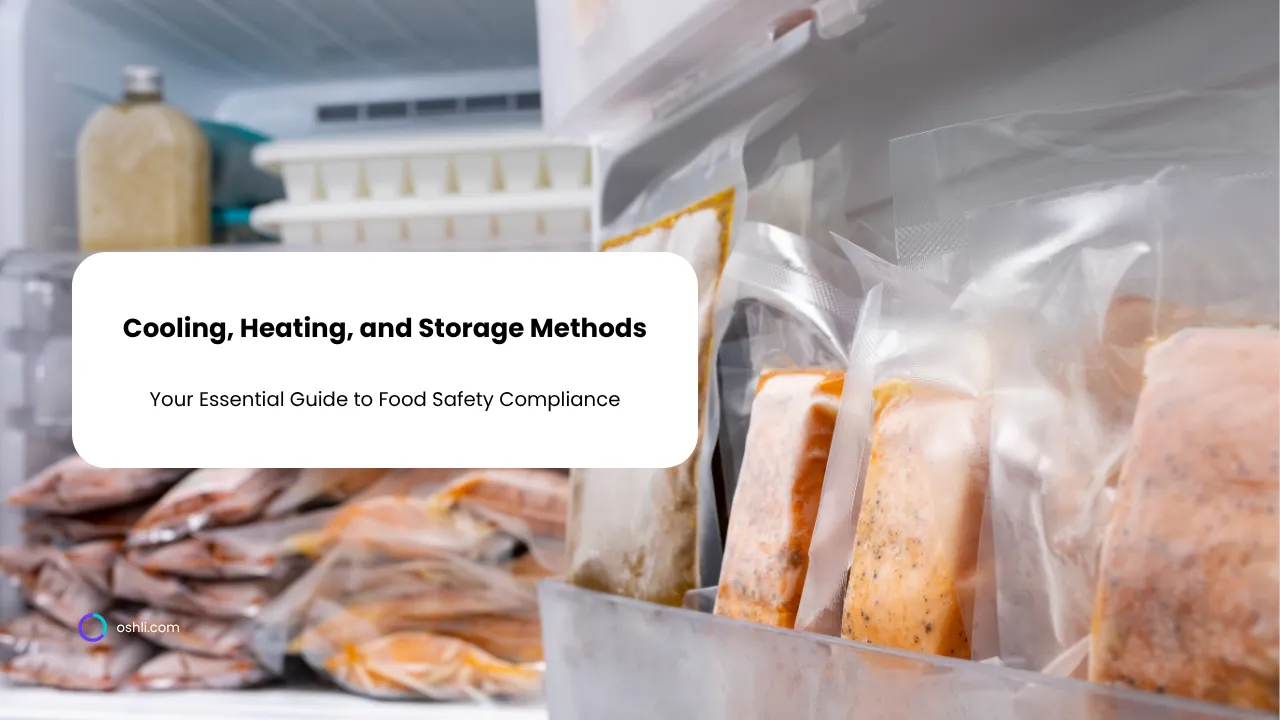
Cooling, Heating, and Storage Methods: Your Essential Guide
Discover how to create a cooling, heating, and storage methods template to ensure food safety, meet compliance, and optimize temperature control with free templates.

The Impact of Artificial Intelligence on Food Certification: Innovations, Challenges, and Reflections for the Future
Food certification has long been a cornerstone for ensuring the quality, safety, and consumer trust in the products we eat. In recent years, artificial intelligence (AI) has been transforming various sectors—and food certification is no exception. This article, written in approximately 3000 words, dives deep into how AI is reshaping the world of food certification. It explores the benefits, the uncertainties, and raises questions that invite us to rethink the traditional models of food safety.